
No Blood For Nuts
A peculiar military strike in the early days of the Iran War reveals the true intent of the American/Israeli military and who might truly be calling the shots.


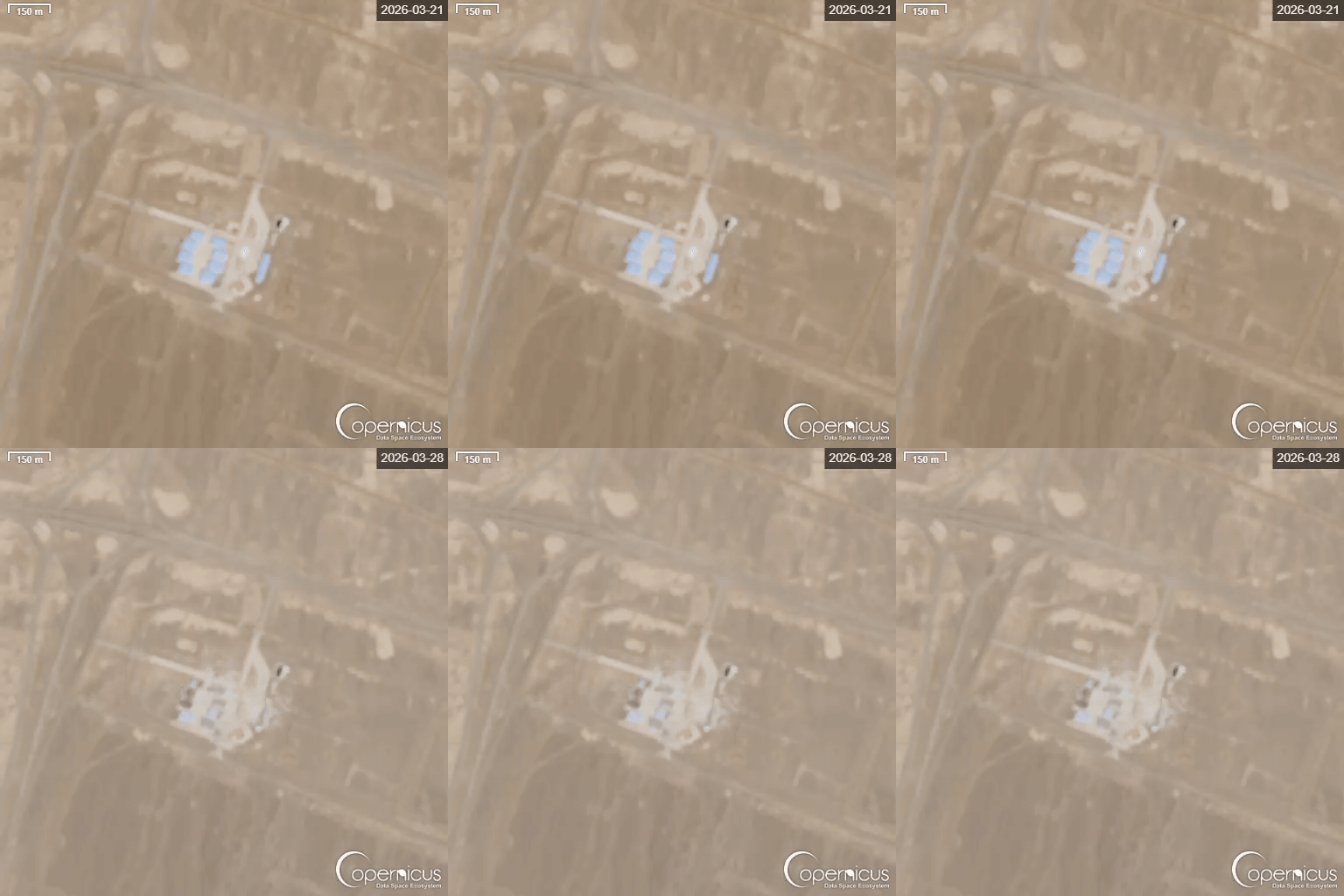
Satellite imagery from March 28th reveals the destroyed remnants of pistachio warehouses owned and operated by the Iranian Pistachio Company near Rafsanjan Airport in Kerman, Iran—presumably targeted by American or Israeli fighter jets. If no reasonable military capacity are revealed (such as being used to store munitions), this could be conceivably be considered an attack on objects indispensable to the survival of the civilian population to deny them sustenance— in direct violation of Article 54 of the Geneva Convention Protocol I. While I’m under no illusion that invoking international law is meaningful or useful in any capacity, it does indicate that there seem to be non-military targets of priority for the Americans; but why waste munitions to destroy a handful of pistachio warehouses? The answer lies in a cold war still being waged today whose roots run deeper than that of the Iran-America war; the pistachio wars.
In 1971, the Internal Revenue Code was amended to remove tax shelters for the production of new citrus and almond groves. Notably left out of the new rules was any mention of the production of pistachio groves, allowing the nut to remain under tax shelter. This set off a gold rush of farmers looking to plant pistachios across Southern California which was further intensified a year later in 1972 when the Shah of Iran— at the time the global supplier of pistachios— mandated they be given to school children as part of the country’s free breakfast program, thereby reducing exports of the nut from America’s top competitor and allowing them to increase global market share. The unique, arid conditions necessary to grow pistachio trees meant that global pistachio production was dominated by only three countries; Turkey, America and Iran.
Chief among those who came out on top of the race to plant pistachios are Lynda and Stewart Resnick, co-owners of the Wonderful Company— the largest producer of pistachios in the US with an annual revenue of around USD $4 billion. Prior to their entrance into agriculture, the couple ran the Franklin Mint— a retailer selling collectibles, model cars, souvenir plates, figurines, etc.— and apparently made millions selling porcelain Princess Diana dolls.
Journalist Yasha Levine began reporting on the Resnicks back in 2013 for his piece on “Oligarch Valley”; a 250 mile stretch of “coma-inducing farmland, orchards, arid dirt, howling winds, spooky rural desolation and clouds of airborne fecal matter” that connects Southern and Northern California.

Levine’s investigation began as a look into California’s billionaire-dominated public water system. The Resnicks are one of many families that own shares of the Kern County Water Bank, a natural aquifer at the edge of the Central Valley that had been converted into a privatized water-storage facility. Initially designed by California’s Department of Water Resources as an emergency reservoir, slight changes to water regulations in 1995 allowed the sale of the water bank to a small clique of Oligarch Valley landlords — including the Resnicks.
Once rain water entered the reservoir, it ceased to be a public resource and could be sold by the owner back to the state, making them a de-facto middleman making profits on state supplied water. In Levine’s words “the Resnicks dominated and controlled the water bank so thoroughly that it’s become a de facto extension of their private agribusiness.” The Resnicks used their monopoly on cheap, abundant water to irrigate thousands of acres of farmland in Oligarch Valley, doubling their cultivated land holdings in three years.
As mentioned above, prior to their 1978 entrance into the agriculture industry, the Resnicks were in the trinket business. Stewart Resnick, the mastermind behind the Oligarch Valley water privatization scheme, admitted that farming was a purely passive investment for them, a way to safely skirt taxes and escape the runaway inflation of the 70’s. However, that all changed with the 1979 Iranian Revolution. Following the revolution, 52 American citizens were taken hostage from the U.S. Embassy, in an act of protest against the U.S.’s attempts to undermine the sovereignty and legitimacy of the new Iranian regime.
In response, President Jimmy Carter levied what would be the first in a series of escalating sanctions and trade restrictions against Iran, cutting America off from the global pistachio producer and immediately opening a new market for alternative sources. A quote from the 1979 issue of the New York Times about pistachio production references the new conditions created by the Iranian Revolution; “Because of conditions in Iran, California is going to become an entity in the U.S. market much quicker,” said Joseph Edgar, vice president for production at the T.M. Duché Nut Company, which expects to market a third of the California pistachios.
The Resnicks immediately seized on this opportunity and began buying swaths of farmland in the valley at rock bottom prices due to long periods of drought (that they’ve also been accused of significantly contributing to). By the end of the decade, the Resnicks had amassed nearly 160 square miles of farmland in Oligarch Valley and, by 1986, were greatly benefiting from the 300 percent tariffs imposed on Iranian pistachio exports.
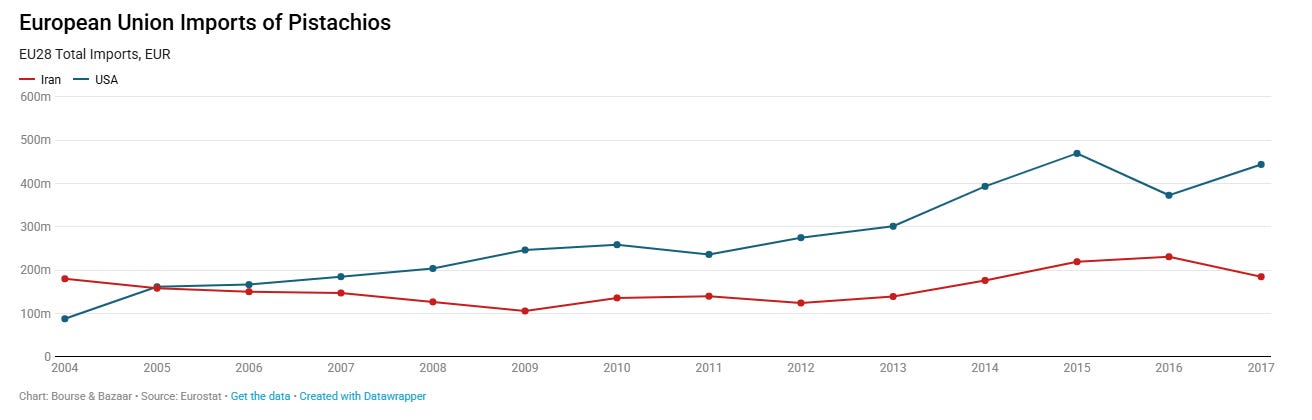
By 2005, the US became the leading exporter of pistachios to the European Union, before sanctions on Iran were tightened. In the time since, Iranian pistachio exports have remained flat while US exports have more than doubled, with the Resnicks controlling something like 60% of the industry. As Levine describes, “the US pistachio industry as a whole is very aware that its success has been born out of the sanctions against Iran.” Iranian pistachios are considered superior to American pistachios, so much so that Israel still buys Iranian pistachios shipped in through Turkey. If sanctions were ever loosened on Iranian pistachios, it would surely be a blow to the American pistachio monopoly, particularly to the Resnicks (as indicated by the slight dip in American pistachio imports around 2016 — when the Iran Nuclear Deal went into effect).
Therefore, the Resnicks began aligning themselves with all manners of politically diffusive groups and individuals to simultaneously launder their image as liberal progressives (by being major Democrat party donors, backing the liberal pro-business Aspen Institute and mingling with the likes of Stephen Colbert and Ariana Huffington) while donating to Republican candidates who are pro-big business, pro-agriculture and anti-Iran.
According to Bourse and Bazaar, the Resnicks have donated to three Republican congressmen over the years: David Valadao, Kevin McCarthy, and Devin Nunes. All three have been outspoken critics of the Joint Comprehensive Plan of Action (JCPOA), also known as the Iran Nuclear deal, which relaxed economic sanctions on Iran in exchange for denuclearization agreements:
“Nunes believed that the JCPOA “open[ed] the door for the IRGC to exploit the global economy to finance the growth of the IRGC’s web of terrorism to every corner of the planet.” Valadao argued that sanctions relief would provide Iran financial resources that would be used to “make the Middle East even less stable and increase the likelihood of war in the region.” McCarthy praised President Trump’s withdrawal from the nuclear deal earlier this year.”
More recently, Kevin McCarthy has been hugely supportive of America’s war with Iran claiming that, in the long term, President Trump will be hailed as a hero for reshaping geopolitics and making the world safer. David Valadao similarly commended Trump for his actions, accusing Iran's government of sponsoring terror abroad and threatening the interests of the United States and its allies.
Unsurprisingly, the Resnicks have invested most of their resources towards advancing the Israeli settler colonial state. Tax filings from 2008 show that Stewart and Lynda (both who come from middle class Jewish families) are on the board of trustees for the pro-Israel Washington Institute for Near East Policy think tank, itself created by the former deputy director of research for AIPAC. The couple also provides annual donations ranging from USD $200,000 to USD $500,000 primarily through the American Friends of Israeli Defense Forces, a not-for-profit foundation that serves as the fundraising arm of the Interdisciplinary Center Herzliya, a think tank and academic institution with close links to the IDF and that provides courses on hasbara for the Israeli state. Over the years, the Resnicks have donated tens of millions of dollars to support the expansion of Israeli soft power through scholarships, establishing fellowships and supporting research, artistic and technological advancement. In Levine’s words from nearly a decade and a half ago;
And so the Resnicks did what any smart and ruthless American would do: they made common cause with oil companies, Islamophobes, neocons and Likudniks, and began funneling money to think tanks and political advocacy groups that take a hardline approach with Iran. Economic sanctions, sabotage, vilification—all these things worked in the Resnicks’ interest. Bombing some of Iran’s pistachio fields wouldn’t be so bad, either…
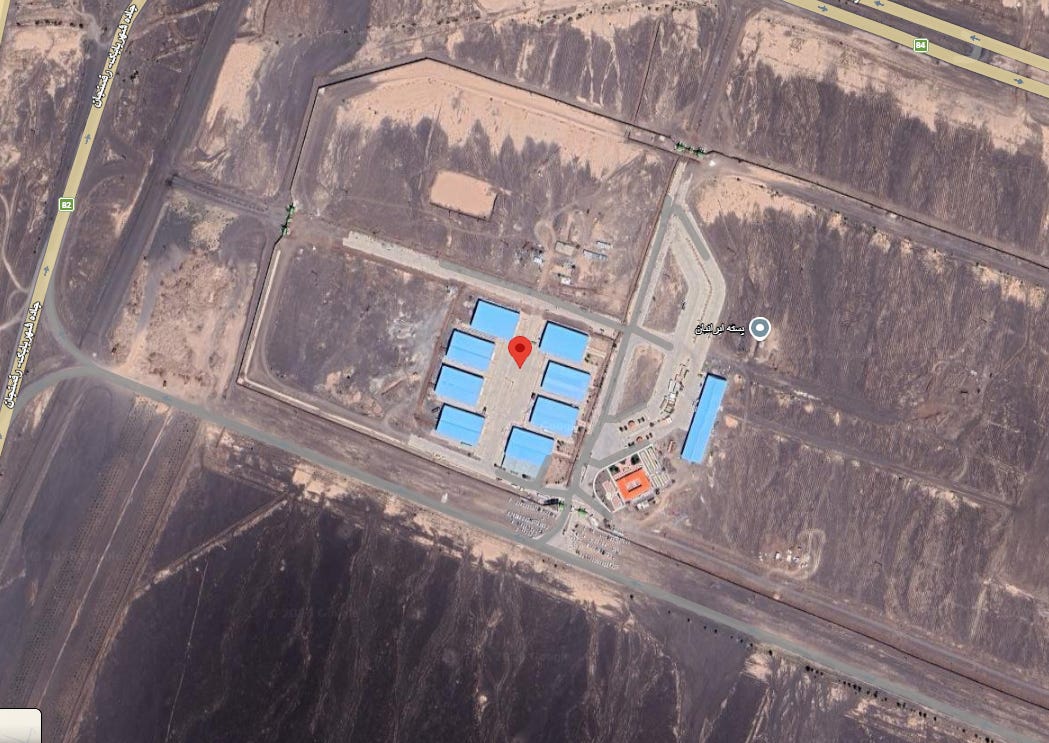
It seems that Levine’s prescient words have become official military policy with the recent revelations of the demolition of Iran’s pistachio warehouses. Potentially unrelated, on April 4th the satellite imaging company Planet labs (which provides Google with high-resolution imaging data for use in Google Earth and Google Maps) announced their compliance with a request from the U.S. government to indefinitely withhold visuals of Iran and surrounding region of conflict in the Middle East, severely limiting the ability of OSINT accounts to verify and investigate American or Israeli military strikes. As of today, if you check the coordinates for the destroyed pistachio warehouses on Google Maps, you will be shown that the warehouses are still standing.
The military and geopolitical goals of the war with Iran have been Israeli from their conception—some could say they were conceived thousands of years ago as outlined in the Book of Esther. They hold no actual value for the American government, the American people, or even American hegemony and, as long as the war rages on and the global supply chain feels it’s repercussions, will continue to tank the popularity of all complacent politicians. After the dust settles and the hundreds of bodies of school girls are able to be put to rest, history will remember the two factors that brought us to the brink of nuclear war or further:
Nuts for Jews
Jews going nuts